
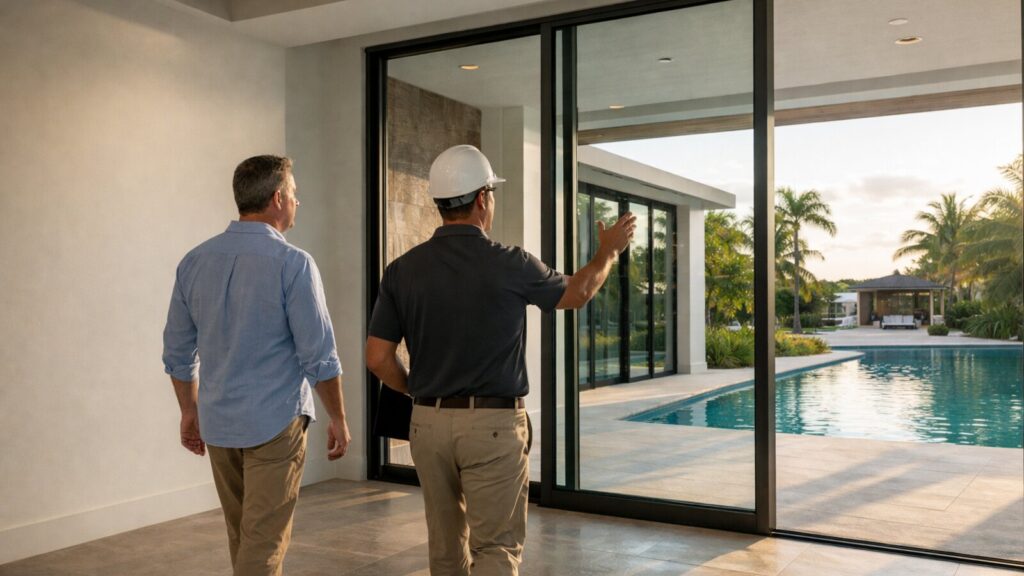
The last few weeks of a project are when an owner’s leverage is at its lowest and fatigue is at its highest. The house or building looks finished, the team wants to move on, and the final payment request is on the desk. A disciplined construction closeout checklist is how an owner keeps that last stretch from turning into months of open punch items, missing documents and lien questions. This guide explains what closeout should include for owners in Miami-Dade, Broward and Palm Beach, why it deserves its own plan, and where an owner’s representative fits even when you already have a capable architect and general contractor.
Why closeout is where owners lose money quietly
During construction, problems are visible: a late delivery, a change order, a schedule slip. At closeout, the risks are mostly paperwork and timing, which makes them easy to underestimate. Common examples include releasing retainage before the punch list is complete, accepting the keys without warranties and operating manuals, and paying the final invoice without confirming that subcontractors and suppliers have been paid.
That last point matters in Florida because of the construction lien law. Section 713.06 of the Florida Statutes addresses the rights of those who do not contract directly with the owner, and it includes a requirement for the contractor to provide a final payment affidavit to the owner. Your attorney can explain how the lien law applies to your project, but the practical point is simple: final payment should follow documentation, not precede it.
The construction closeout checklist, phase by phase
Closeout is easier to manage when it is broken into phases with a clear owner decision at the end of each. The list below is a starting point; your contract documents and project type will add items.
1. Substantial completion
- Confirm what your contract says substantial completion means and who certifies it, often the architect.
- Walk the project with the architect, contractor and your representative, and agree on a written punch list with responsibility and target dates for each item.
- Confirm the status of final inspections and any certificate of occupancy or completion the building department will issue.
- Agree on when the owner takes over utilities, insurance and security, so there is no gap in coverage.
2. Punch list completion
- Track each punch item to sign-off rather than relying on verbal assurances.
- Re-walk the project before accepting the list as complete, including roof, exterior envelope, mechanical rooms and site work, not just finished interiors.
- Photograph completed items and conditions at turnover for your records.
3. Documents and turnover package
- Warranties from the contractor and major manufacturers, with start dates and contact details.
- Operation and maintenance manuals for equipment such as air conditioning, generators, pool systems, elevators and smart-home controls.
- As-built or record drawings showing what was actually installed.
- Final permits, inspection approvals and any certificate issued by the building department.
- Attic stock and spare materials, labeled and inventoried.
- Keys, access codes and system passwords transferred to the owner.
4. Financial closeout
- Reconcile the contract sum against approved change orders and allowances, so the final invoice reflects only what was agreed. Our guide to change order management for owners explains how to keep that record clean during the job.
- Review the final payment application with the same discipline as every progress payment; see our article on construction draw review for owners.
- Collect the contractor’s final payment affidavit and final lien releases from subcontractors and suppliers as your attorney advises.
- Release retainage only when the conditions in your contract have been met.
5. Training and handover
- Schedule training on major systems for the people who will run the property, whether that is a household manager or a facilities team.
- Set up a maintenance calendar based on the manuals and warranty conditions, since some warranties depend on scheduled service.
6. Warranty period
- Plan a walkthrough before the contractor’s warranty period ends and submit warranty items in writing.
- Keep a single log of issues, dates and responses.
Closeout mistakes owners tend to regret
Most closeout problems come from the same handful of shortcuts, usually taken because everyone is tired and wants to move in or open.
- Moving in before the punch walk. Once furniture, art and staff are in place, it becomes much harder to separate construction defects from move-in damage, and the contractor’s access becomes limited.
- Treating the punch list as a conversation. Items agreed verbally on site tend to disappear. A single written list with owners, dates and sign-off is what keeps everyone accountable.
- Accepting a partial turnover package. Manuals and warranties promised “next week” can take months to arrive, and some warranties require registration or scheduled service from the start date.
- Releasing money to keep the peace. Paying early to preserve a relationship removes the owner’s main incentive for the contractor to finish.
- Losing the project record. Emails, photos and approvals spread across several inboxes are hard to rely on later. Assign one place, and one person, to keep them.
In South Florida, timing adds its own pressure. Exterior envelope, roofing and drainage items are worth confirming before the rainy and hurricane season tests them, and owners of waterfront or high-value homes often want specialty systems verified by the installer, not just switched on.
Defects found after you move in
Some problems only appear once a building is occupied: a leak in the first heavy rain, a system that cannot keep up in August. Florida has a pre-suit process for construction defect claims under Section 558.004 of the Florida Statutes, which involves written notice and an opportunity for the contractor, subcontractor, supplier or design professional to respond. Owners should speak with a construction attorney before relying on it. Good closeout records, including photos, the punch list history and warranty correspondence, make any later conversation more productive, whatever route it takes.
“I already have an architect and a general contractor”
Most owners who ask about closeout support already have a strong team, and that team matters. The architect’s role is usually defined by its contract and often centers on design intent and certifications. The general contractor is responsible for building the project and is, understandably, motivated to reach final payment. Neither is positioned to sit only on the owner’s side of the table during closeout.
An owner’s representative fills that gap. At closeout, that usually means running the punch list process, confirming the turnover package is complete, reconciling the final numbers and coordinating lien documentation with your attorney before money moves. The goal is not to replace the architect or the contractor; it is to make sure someone with construction experience is focused on protecting the owner’s capital as the project ends. You can read more about how this works on our owner’s representation page.
The best closeout begins well before the last month. Contract language about retainage, warranties, as-built drawings and turnover requirements sets the terms for everything above, which is why closeout deserves attention during construction contract review, not just at the end.
Frequently asked questions
When should closeout planning start?
Ideally at contract signing, when turnover requirements and retainage terms are set. Practically, a detailed plan should be in place well before expected substantial completion, adjusted to the size of the project.
Should I hold back retainage until every punch item is done?
That depends on your contract and the advice of your attorney. Many owners tie retainage release to clearly defined completion and documentation conditions rather than to a date.
Is a construction closeout checklist different for a residence and a commercial building?
The phases are similar. Commercial projects often add items such as tenant coordination and systems commissioning, while luxury residences tend to involve more specialty systems and finish standards to verify.
What if the contractor has stopped responding?
Document every request in writing and talk with a construction attorney about your contract rights and the notice requirements that apply before taking further steps.
Plan the finish before you pay for it
Closeout is the last point where an owner still has meaningful leverage, and it rewards preparation. If you are approaching completion on a home or commercial project, or about to sign a contract for your next one, request a 30-minute project strategy session before committing capital. We will look at where your project stands and what the owner needs in place to finish clean.